How to Sing Higher Notes Like Michael Jackson
How to Sing Higher Notes Like Michael Jackson: Vocal Exercises for Beginners
Want to sing higher notes like Michael Jackson? From his smooth vocal transitions to his distinctive high-pitched phrases, MJ developed a signature sound that continues to inspire singers of all ages. While nobody can replicate his voice exactly, you can learn from the vocal techniques that helped make his performances so memorable.
Want to sing higher notes like Michael Jackson? From his smooth vocal transitions to his distinctive high-pitched phrases, MJ developed a signature sound that continues to inspire singers of all ages. While nobody can replicate his voice exactly, you can learn from the vocal techniques that helped make his performances so memorable.
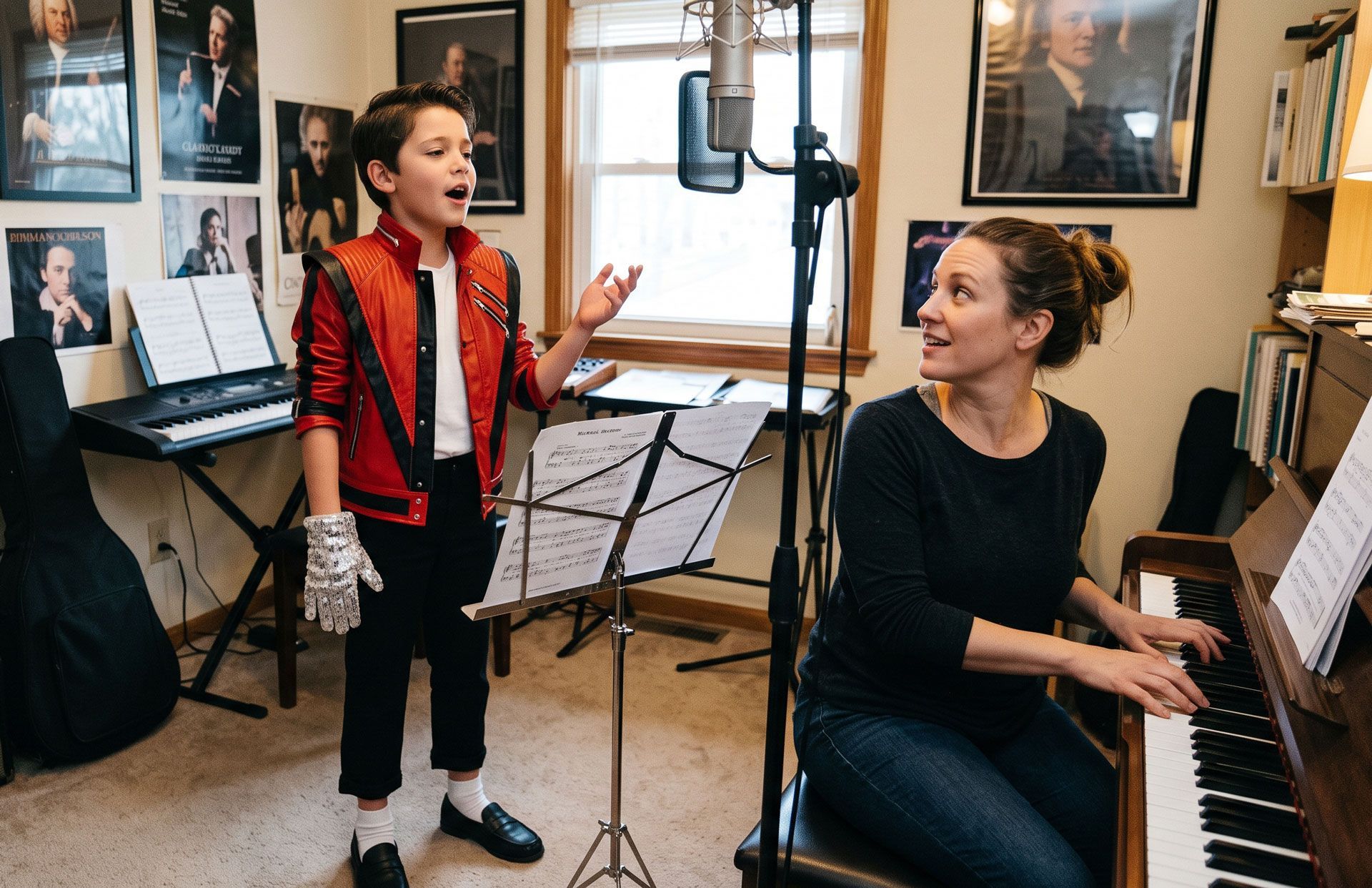
Whether you're a beginner singing along to Michael Jackson songs, a teen interested in pop vocals, or an adult looking to expand your range, the right exercises can help you develop your own voice while exploring the techniques behind his distinctive style.
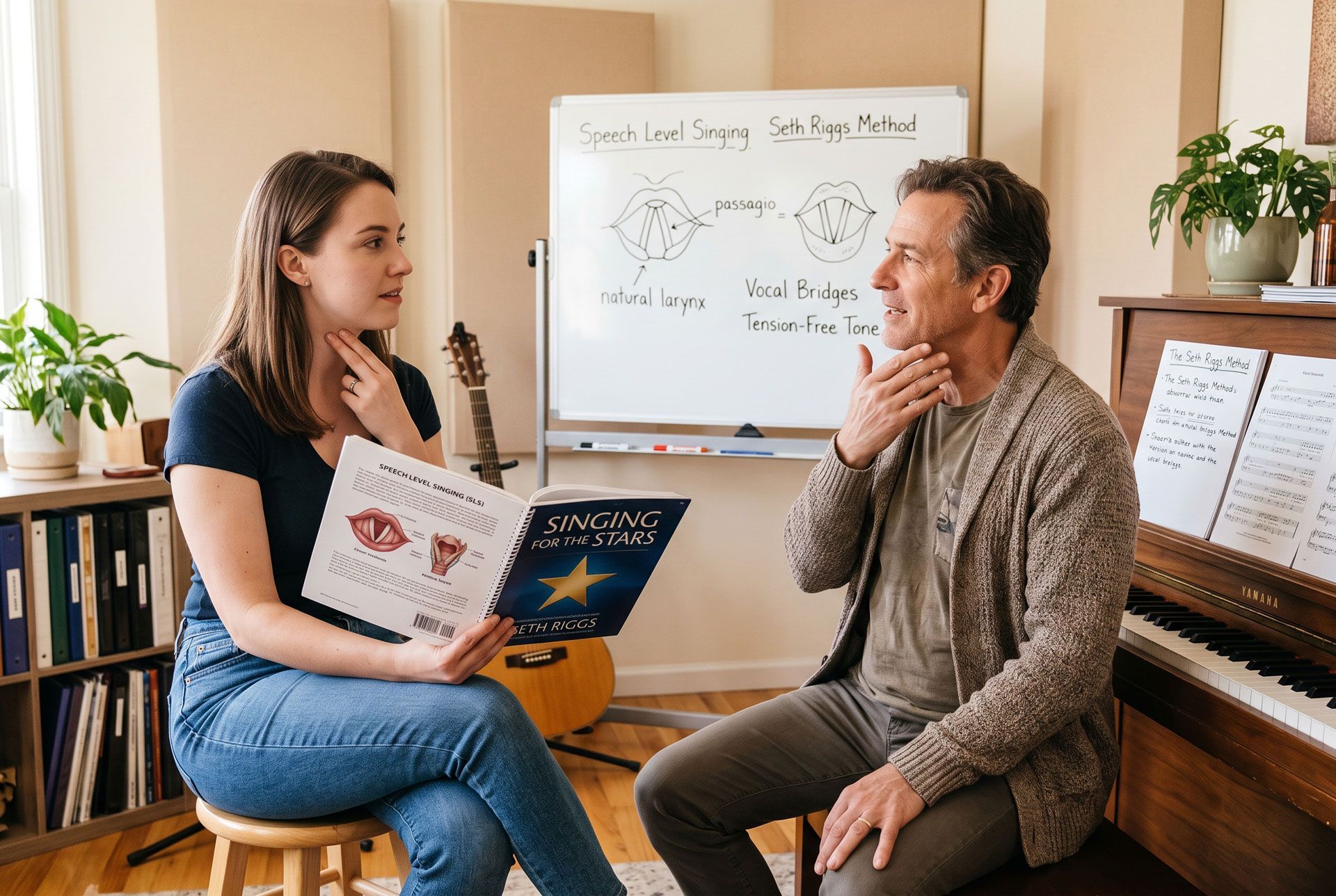
At The Singing Place, vocal coach Kathleen Kernohan incorporates Speech Level Singing (SLS) principles into personalized voice lessons for children, teens, and adults. Developed by renowned vocal coach Seth Riggs, this approach focuses on balanced vocal coordination and smoother transitions between registers.
What Makes Michael Jackson's Voice So Distinctive?
Michael Jackson's singing combined vocal agility, expressive phrasing, rhythmic precision, and a remarkable range of vocal colors. His performances often shifted between lighter upper-register sounds, more direct melodic phrases, and energetic vocal accents.
Rather than relying on high notes alone, he used changes in tone, dynamics, and phrasing to bring songs to life.
If you want to sing higher notes like Michael Jackson, there are several skills worth exploring:
- Register transitions: Moving between lower and higher parts of your voice with greater smoothness.
- Vocal agility: Navigating quick melodic changes while maintaining pitch accuracy.
- Tone control: Exploring lighter, brighter, and more expressive vocal qualities.
- Rhythmic precision: Matching vocal phrases and accents to the groove of the music.
- Dynamic control: Changing intensity without automatically pushing more volume.
These skills take time to develop, but beginners can start working on them through simple, comfortable exercises.
How to Sing Higher Notes Without Straining
One of the most common mistakes singers make is trying to carry the same heavy feeling of their lower voice into every high note. This can lead to a tight throat, excessive volume, or a sudden vocal break.
To develop your upper range, focus on coordination rather than force. Start with notes that feel comfortable and gradually explore higher pitches without pushing through discomfort.
1. Warm Up With Gentle Humming
Before attempting challenging high notes, give your voice time to warm up.
Begin by humming a comfortable pitch with your lips gently together. Slowly move up and down a few notes, keeping the sound relaxed and easy.
This exercise helps you focus on pitch and vocal comfort without immediately demanding a loud or powerful sound.
Try this:
Hum a short, familiar melody from a Michael Jackson song in a comfortable key. Keep the melody within your current range rather than trying to match the original recording's highest notes.
2. Practise Gentle Vocal Sirens
Vocal sirens involve gliding from a lower pitch to a higher one and back again. They can help you become more aware of how your voice changes as you move through your range.
Start with a gentle “oo” sound and glide upward a short distance before returning to your starting note. Keep the movement smooth and avoid reaching for notes that cause your throat to tighten.
Over time, a vocal coach can help you adjust the exercise to address the parts of your range that feel most challenging.
3. Use Lip Trills to Explore Higher Pitches
Lip trills involve gently vibrating your lips while producing a vocal sound. They offer a useful way to explore pitch changes without relying on a forceful attack.
Relax your lips, maintain a gentle stream of air, and add a comfortable note. Then glide upward a few pitches and return to where you started.
The goal is not to reach the highest note possible. It's to maintain an easy, controlled sound as the pitch changes.
4. Learn to Blend Your Vocal Registers
If your voice cracks when you try to sing high notes, you may be struggling to coordinate the transition between registers.
Singers often refer to chest voice, head voice, and mixed voice when describing different aspects of vocal production. Learning how these parts of your range work together can help you approach challenging melodies with greater control.
Speech Level Singing, developed by Seth Riggs, uses vocal exercises designed to help singers work toward balanced coordination and smoother register transitions.
For someone hoping to sing higher notes like Michael Jackson, this can be a useful area to explore. Rather than forcing a heavy sound upward, you can work with a vocal coach to discover a more comfortable approach to your upper range.
5. PractiCe Short Scales Before Singing Full Songs
Once your voice feels warmed up, practise a simple five-note scale on a comfortable vowel such as “oo.”
Start in an easy part of your range and move the pattern up gradually, stopping before you feel the need to shout or squeeze your throat.
Afterward, try applying the same sense of control to a short phrase from a song you enjoy.
Breaking a challenging melody into smaller sections makes it easier to focus on pitch, timing, and vocal coordination without becoming overwhelmed.
How to Practise Singing Like Michael Jackson
If your goal is to sing higher notes like Michael Jackson, choose a song that inspires you and approach it as a learning exercise rather than a test of how closely you can copy his voice.
Start by listening for where the melody rises, where the vocal tone becomes lighter, and how the phrases fit the rhythm. Then try singing a short section at a comfortable volume and in a key that suits your voice.
You can gradually work on the more challenging sections as your coordination improves.
Keep these tips in mind:
- Choose the right key. You don't have to sing in the original key if it puts the melody outside your comfortable range.
- Work on short phrases. Practise one difficult section at a time instead of repeatedly attempting the entire song.
- Avoid forcing the original sound. MJ's distinctive vocal qualities developed through his own anatomy, experience, and artistry.
- Focus on musicality. Timing, phrasing, and expression are just as important as reaching high notes.
- Take breaks. Stop if you experience pain, persistent hoarseness, or unusual vocal fatigue.
The goal is to learn from his style while developing a sound that works for your own voice.
Can Speech Level Singing Help You Sing Higher Notes Like Michael Jackson?
Speech Level Singing is a vocal training approach developed by Seth Riggs that focuses on balanced vocal coordination throughout a singer's range.
The method is relevant to singers who want to improve register transitions, explore their upper range, and develop more consistent vocal control. It does not guarantee a particular range or reproduce another artist's sound, but it can provide a structured way to work on vocal technique.
With individualized instruction, singers can work on areas such as:
- Moving more smoothly between registers.
- Reducing unnecessary tension when approaching higher notes.
- Improving pitch consistency and vocal flexibility.
- Developing a more coordinated upper range.
- Applying technique to contemporary pop songs and other musical styles.
The right exercises depend on your current abilities and goals. A beginner may need to focus on comfortable pitch changes and basic coordination before attempting the more demanding phrases found in Michael Jackson's music.
Singing Lessons for Children, Teens, and Adults
You don't have to be an experienced performer to start developing your voice. Singing lessons can help beginners build confidence, improve pitch awareness, and explore the music they love.
For children and teens who enjoy Michael Jackson or contemporary pop, age-appropriate instruction can provide a foundation in melody, rhythm, vocal coordination, and musical expression without encouraging them to force their voices into an adult sound.
Adults can also benefit from vocal coaching, whether they're returning to singing after years away, learning a new hobby, or hoping to improve their technique for auditions and performances.
At The Singing Place, lessons are tailored to each student's experience, interests, and goals. Vocal coach Kathleen Kernohan is a certified Speech Level Singing instructor who trained with Seth Riggs and other master teachers of the method.
Her personalized approach helps students explore their voices, develop their technique, and work toward greater confidence as singers.
Start Working Toward Your Higher Notes
Learning to sing higher notes like Michael Jackson takes patience, practice, and an understanding of how your own voice works. You don't need to force high notes or imitate every detail of another singer's sound to make progress.
Start with gentle warm-ups, practise short melodic patterns, and pay attention to how your voice feels as you move upward in pitch. If you're struggling with vocal breaks or tension, working with an experienced vocal coach can help you identify the skills you need to develop.
The Singing Place offers personalized voice lessons for children, teens, and adults who want to strengthen their vocal technique, explore their musical interests, and build confidence.
Ready to work on your high notes?
Contact
The Singing Place in Hollywood & Westlake, CA, to learn more about voice lessons and discover how personalized vocal coaching can help you develop your own sound.
Share this post